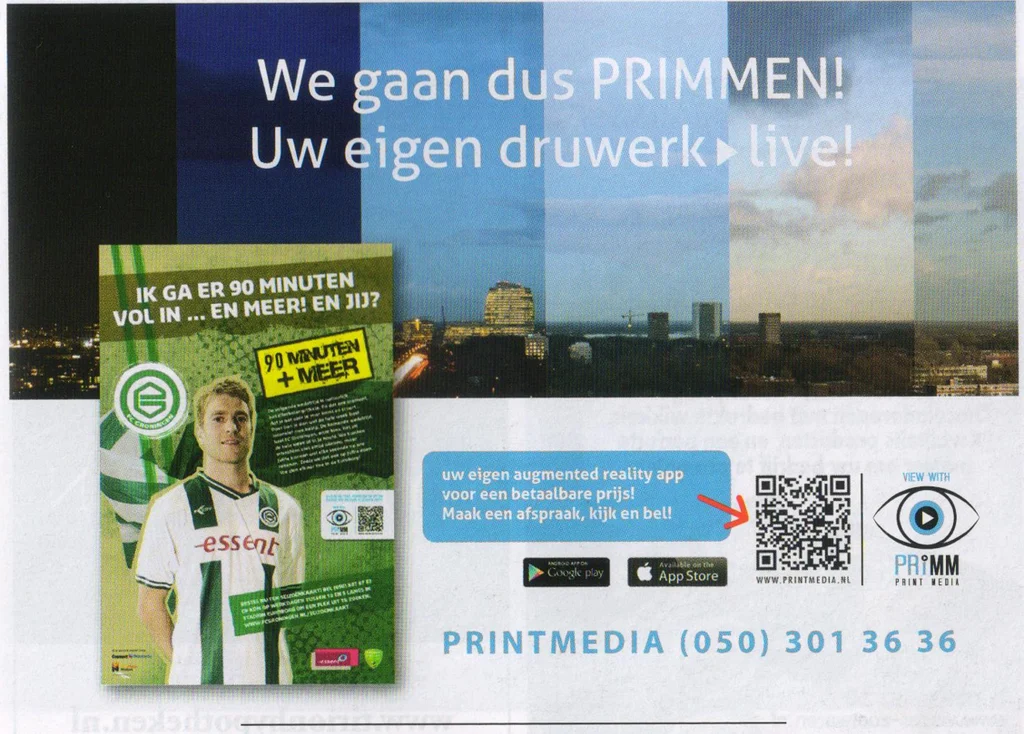
In 2014, the print industry was in a state of existential panic. Smartphones were stealing their audience, and physical matchday programmes were at risk of becoming obsolete. To fight back, local media companies experimented with bridging the physical and digital worlds. Page 49 of the May 2014 FC Groningen matchday programme features a fascinating technological time capsule from this exact era: an advertisement for an Augmented Reality (AR) app called PRIMM.
The ad features a picture of the matchday programme itself, overlaid with a digital play button, declaring: “We gaan dus PRIMMEN! Uw eigen drukwerk live!” (So we are going to PRIMM! Your own printwork live!). The concept, developed by a local company called Connect PrintMedia, was highly ambitious for the time. Fans were instructed to download the app, scan the printed page with their smartphone camera, and watch as the static image magically turned into a playing video. Their slogan was bold: “Papier leeft en spreekt” (Paper lives and speaks).
But why is this specific tech startup historically significant for a football museum? If you dig into the digital archives of their now-defunct website, you find a massive local football easter egg. At the very bottom of their homepage, Connect PrintMedia proudly advertised their flagship project: the “ARJEN ROBBEN AR APP.” They had developed the augmented reality features for the very first book about the legendary Groningen youth product and Bayern Munich superstar. It was a perfect synergy of local northern tech and local football royalty. They were using Robben’s global appeal to convince the local business owners sitting in the Euroborg to buy AR features for their own corporate brochures.
A Look into the Future
So, what happens if a curious fan in 2026 scans the QR code printed in this 2014 matchday programme? They will be met with the cold reality of a digital ghost town. The “PRIMM” revolution never quite took over the world. The app has long been purged from the App Store and Google Play, and the original website domain was lost to time, now existing only in the archives of the Wayback Machine. While Augmented Reality eventually found massive success in social media filters, the specific mechanic of downloading a proprietary app to scan a magazine page proved too cumbersome. This advertisement, and the invisible Arjen Robben videos it once linked to, remains a charming, nostalgic monument to the awkward teenage years of mobile technology, when we all tried to make paper come alive.