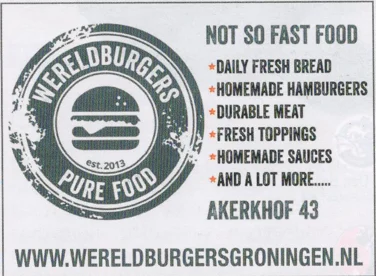
If you track the advertisements in the FC Groningen matchday programmes throughout the 2013/2014 season, you can witness a real-time shift in Dutch culinary culture. In the autumn editions, the ad spaces were dominated by traditional, deep-fried snacks from FEBO or massive all-you-can-eat American buffets. But on page 7 of the February 2014 edition, a new aesthetic arrives: an advertisement for Wereldburgers.
Located at Akerkhof 43 in the city center, the ad features a trendy, stamped logo and a slogan that directly challenges the old guard: “NOT SO FAST FOOD.” The bullet points proudly advertise “Daily Fresh Bread,” “Homemade Hamburgers,” “Durable Meat,” and “Homemade Sauces.” This was the exact moment the global mid-2010s gourmet burger revolution—characterized by exposed brick walls, craft beer, and ethically sourced beef—firmly planted its flag in Groningen.
Advertising this concept in a football stadium was a sign that the matchday demographic was evolving. The club’s commercial partners realized that the modern football fan, perhaps a young professional or a university student, was increasingly looking for higher-quality, sustainable dining options before or after the match, rather than just grabbing a quick bite from a vending machine wall.
A Look into the Future
The gourmet burger trend exploded across the Netherlands in the years following this advertisement, fundamentally changing the hospitality landscape of cities like Groningen. Wereldburgers was a pioneer in this local shift, successfully tapping into the growing demand for conscious, high-quality comfort food. While the traditional matchday kroket will never truly die, this 2014 advertisement marks the definitive arrival of the modern, hipster culinary aesthetic into the traditional, working-class ecosystem of the football club.