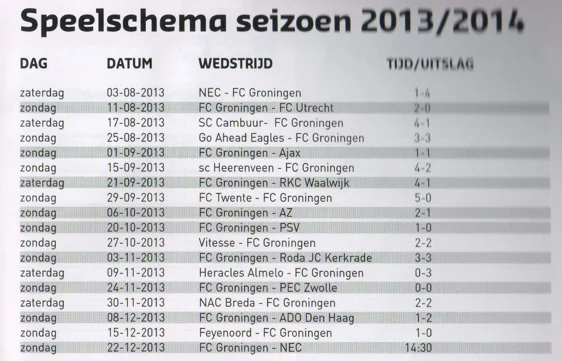
Before football fans could instantly check season schedules and historical results on their smartphones, the back pages of the matchday programme served as the definitive, physical ledger of a club’s campaign. Page 67 of the December 22 edition against NEC Nijmegen features the “Speelschema seizoen 2013/2014” (Playing schedule season 2013/2014), and it tells the complete story of the first half of the season at a single glance.
Looking down the “TIJD/UITSLAG” (Time/Result) column, you can trace the emotional rollercoaster of the FC Groningen fanbase. You see the chaotic 3-3 draw against Go Ahead Eagles in September. You see the glorious 1-1 draw against Ajax and the massive 1-0 home victory over PSV in October. But you also see the recent, painful 1-0 defeat to Feyenoord in the KNVB Beker (Cup) just days before this programme was printed.
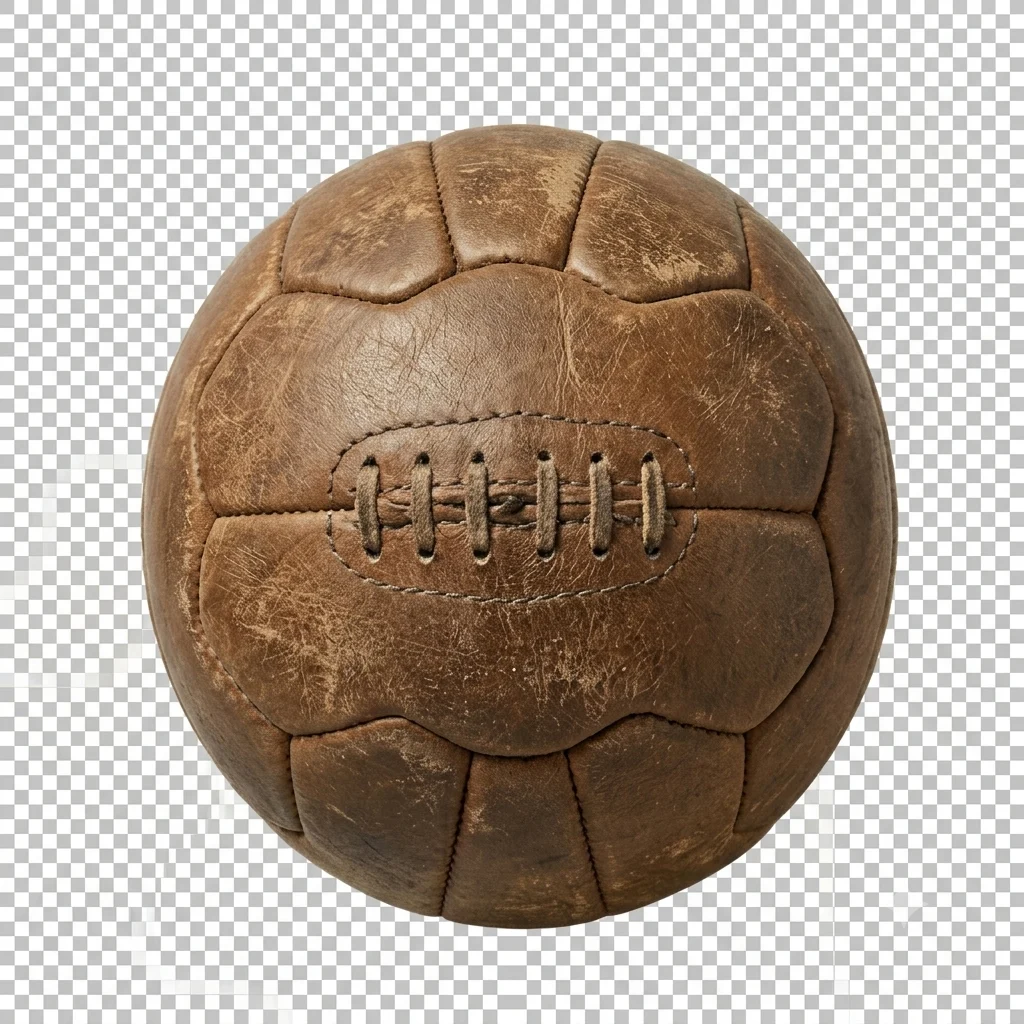
Many fans would keep these booklets and physically write in the scores with a pen as the season progressed. This specific page, printed right before the winter break, represents the halfway point. It is a moment of reflection. The blank spaces next to the 2014 fixtures represent pure, unwritten potential.
A Look into the Future
The blank spaces on the lower half of this page would eventually be filled with the results of a highly successful spring campaign. FC Groningen would use the foundation built in late 2013 to secure a European playoff spot by the end of the season. Today, printed season schedules are largely a nostalgic novelty, replaced by digital calendars and push notifications. But there is an undeniable romance in this physical ledger—a printed map of the season where every victory and defeat is permanently etched in ink.