
Football is often described as a family, but that cliché is only truly tested when tragedy strikes. In the December 2013 matchday programme against NEC Nijmegen, the “Hoofdrolspeler” feature with 22-year-old goalkeeper Marco Bizot is not a standard celebration of his recent excellent form. Instead, it is a raw, emotional reflection on a devastating piece of news that had just rocked FC Groningen.
Under the headline “In korte tijd goede band opgebouwd” (Built a good bond in a short time), Bizot discusses the shocking leukemia diagnosis of his goalkeeper coach, Sierd van der Berg. “After the home match against PEC Zwolle, I was informed about the fact that goalkeeper trainer Sierd van der Berg had been diagnosed with leukemia. I called him right away,” Bizot reveals. “It was obviously a shock for Sierd himself in the first place, but besides that, it was also a huge blow for me to hear.”
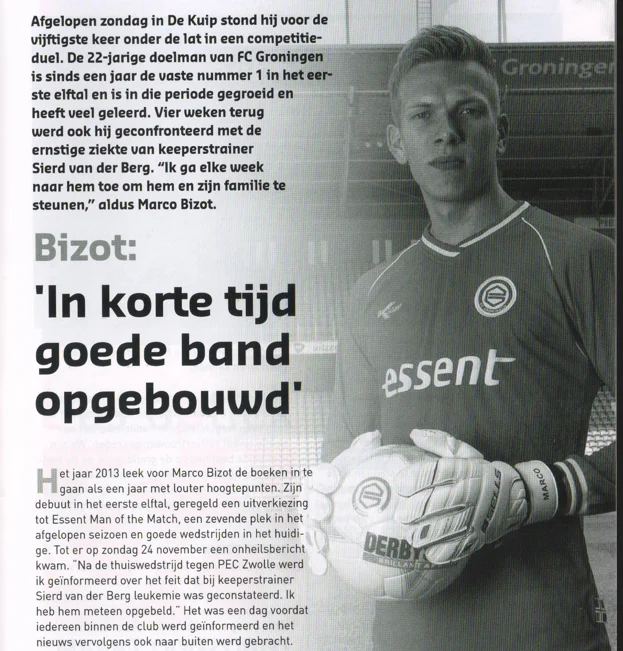
The interview highlights the intense, isolated nature of the “goalkeeper union” within a football club. Bizot explains that he and Van der Berg had grown incredibly close in just a few months. “I want to do what I can for him and his family. Together with my girlfriend Nancy, I visit him every week to support him and help him.” The situation also forced rapid changes in the backroom staff. Bizot notes that he had already worked with Bas Roorda earlier in the season after Ruud Hesp left for PSV, and now he was preparing to work with interim coach Brian van Loo from January onwards. It is a profound look at the human vulnerability hiding behind the professional facade of Eredivisie football.
A Look into the Future
The footballing community in Groningen rallied fiercely around Sierd van der Berg during his treatment. As for Marco Bizot, he channeled the emotional turbulence of this period into his performances on the pitch. He finished the 2013/2014 season as one of the most reliable goalkeepers in the league, earning a transfer to KRC Genk in Belgium. He would later return to the Netherlands to break clean-sheet records with AZ Alkmaar and earn caps for the Dutch national team. But this 2013 interview remains a testament to his character—a young man dealing with intense professional pressure while carrying the heavy emotional burden of his mentor’s severe illness.