
If you read a matchday programme closely enough, you can piece together the rapid, week-by-week timeline of a young footballer’s career. On page 43 of the August 2013 edition, the “Beloften” (Reserves) section highlights the start of the season for Jong FC Groningen. The text proudly announces that the team, managed by Paul Raveneau, kicked off their campaign at the Corpus den Hoorn training complex with a 1-0 victory over Jong Fortuna Sittard.
The scorer of that solitary, match-winning goal? A young talent named Yoëll van Nieff. What makes this detail so fascinating is the context provided just a few pages earlier in the very same programme. As we noted in the club news section, Van Nieff had just been sent on loan to FC Dordrecht. This means that his match-winning free-kick on Monday, August 5th, was essentially his parting gift to the reserve team before packing his bags for senior football in the Eerste Divisie.
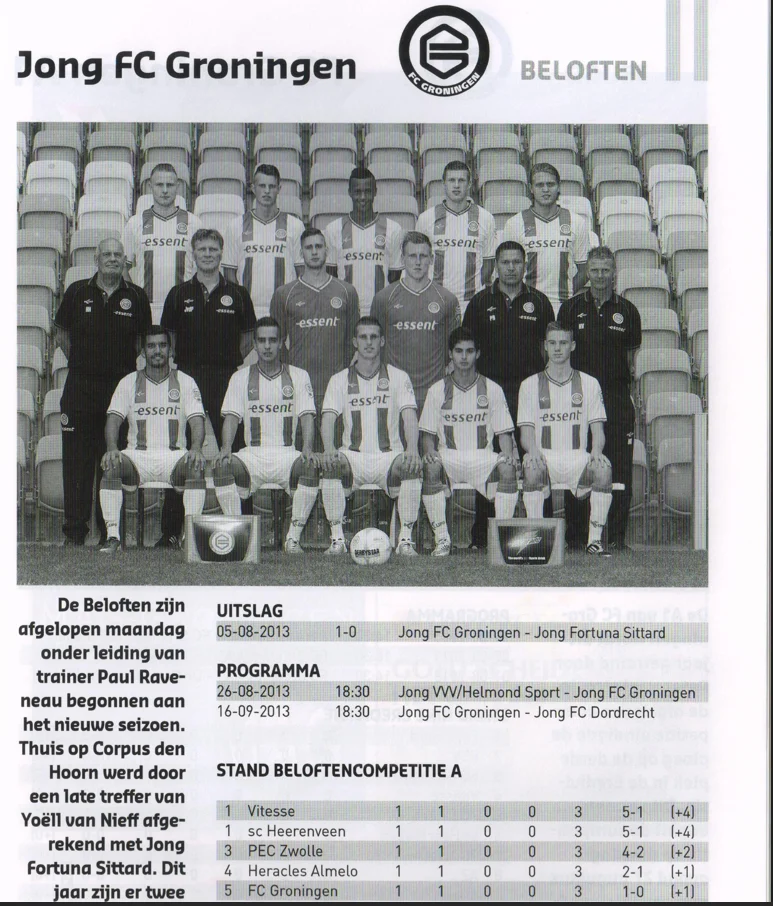
The page also serves as a relic of a bygone era in Dutch football structure. The standings show the “Beloftencompetitie A,” an isolated reserve league consisting of two pools of eleven teams. In 2013, reserve teams played in their own closed ecosystem, completely separate from the professional football pyramid.
A Look into the Future
The landscape of Dutch reserve football would undergo a radical, controversial revolution shortly after this season. The KNVB abolished the isolated “Beloftencompetitie” and integrated the reserve teams of professional clubs directly into the senior football pyramid (Keuken Kampioen Divisie and Tweede Divisie). As for Yoëll van Nieff, that goal against Jong Fortuna Sittard was exactly what he needed: a final stamp of authority at the youth level. His subsequent loan to Dordrecht was a massive success, proving he had outgrown the reserve league printed on this page once and for all.