
In the modern football ecosystem, mid-sized clubs survive and thrive through a very specific business model: scout unknown talent, develop them into stars, and sell them for a massive profit. Page 29 of the August 2014 matchday programme documents the flawless execution of this model with the official announcement of Filip Kostic‘s departure.
Under the header “KOSTIC NAAR VFB STUTTGART”, FC Groningen confirmed that their Serbian talisman had signed a contract with the Bundesliga club until 2019. The text doesn’t shy away from the financial reality, proudly stating that the club received a “forse transfervergoeding” (hefty transfer fee) for the reigning Player of the Year. Crucially, the board also negotiated a sell-on percentage, ensuring the club would continue to profit from Kostic’s future success.
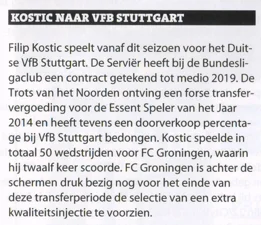
The column notes that Kostic played 50 matches for the club, scoring 12 times. It also reassures the fans that the front office was working hard behind the scenes to use this financial windfall to inject extra quality into the squad before the transfer window closed (which, as we know, resulted in the arrival of players like Jarchinio Antonia).
A Look into the Future
Looking back from 2026, the sale of Filip Kostic was an absolute masterstroke that fueled the club’s historic 2014/2015 KNVB Cup-winning season. The funds allowed the club to build a more balanced squad. Furthermore, Kostic’s career exploded. He became one of the best wing-backs in Europe, winning the Europa League with Eintracht Frankfurt and securing a massive move to Juventus. Thanks to that brilliantly negotiated sell-on clause mentioned in this 2014 programme, FC Groningen continued to reap the financial rewards of his success long after he had left the Euroborg, proving the immense value of a competent technical director.