Forget the multi-million euro transfers and the tactical masterclasses for a moment; for a significant portion of the local demographic, the most exciting news in this matchday programme wasn’t about football at all. It was about French fries. Dominating page 19 is a distinct yellow-and-white advertisement announcing a culinary miracle: the glorious return of Brander Mayonaise.
To an outsider, mayonnaise is just a condiment. But to anyone who grew up in Groningen, the spicy, slightly sweet mayonnaise from the legendary Brander cafeteria on the Grote Markt was a foundational childhood memory. When the original cafeteria closed its doors decades ago, the secret recipe was seemingly lost to history. This full-page ad reveals the triumphant narrative: the beloved local sauce brand Oliehoorn had painstakingly recreated the iconic post-war recipe, bringing it back to the market after a 30-year absence.
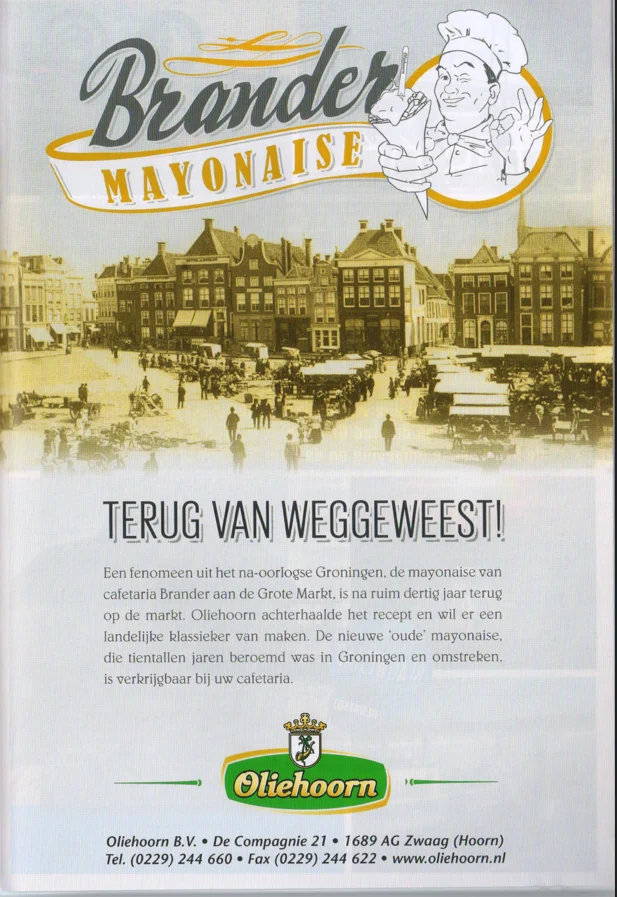
Advertising this gastronomic revival in the football programme was a stroke of marketing genius. The football crowd is built entirely on nostalgia, tribal loyalty, and a deep love for local traditions. By connecting the modern matchday experience with the taste of the old Grote Markt, Oliehoorn tapped straight into the city’s collective soul. It wasn’t just selling a sauce; it was selling a time machine to the 1970s.
A Look into the Future
The resurrection of Brander Mayonaise was a resounding commercial success. By 2026, the distinctive yellow bottles have become a staple in northern supermarkets and local snack bars once again. It stands as a prime example of how regional heritage can be successfully monetized and preserved. And naturally, a generous dollop of Brander mayo remains the undisputed condiment of choice for a portion of stadium fries during a cold Sunday afternoon fixture.