
The final match of a regular season is usually a time for celebration, reflection, and looking forward to the playoffs. For FC Groningen manager Erwin van de Looi, the May 3, 2014 matchday programme against Heracles Almelo should have been a victory lap. His team had just won five consecutive Eredivisie matches, tying a historic club record. Yet, his “De Warming Up” column opens not with tactical pride, but with profound, devastating grief.
“Where the mood until last Monday was cheerful, the death of A-junior Reinier de Groene hit hard,” Van de Looi writes, his words stripping away the usual football clichés. “It is truly terrible that Reinier has passed away. A healthy young guy who is no longer here. My thoughts are primarily with his family and relatives. It was unexpected and it is also very surreal.” Reinier was a promising talent in the highest tier of the club’s youth academy, a boy who was physically and metaphorically close to the first team.
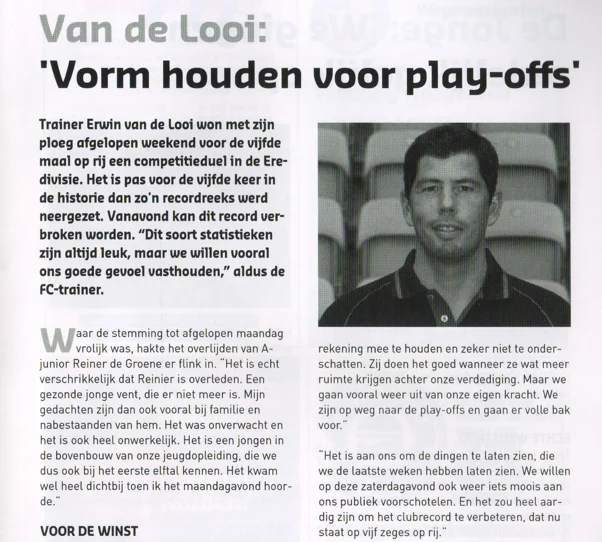
The column is a jarring reminder of the fragility of life. Van de Looi is forced to immediately pivot from mourning a young life to discussing the upcoming match, noting that “the world keeps turning and the switch has to be flipped again.” He urges his team to secure a historic sixth consecutive victory, not just for the record books, but to offer the grieving club a moment of beauty on a dark weekend.
A Look into the Future
The sudden loss of Reinier de Groene left a permanent mark on the FC Groningen academy. It served as a heartbreaking reminder to the young players at Corpus den Hoorn that football, while all-consuming, is ultimately secondary to life and health. The first team did manage to honor his memory by continuing their spectacular form into the European playoffs. Looking back at this specific column, it stands as a poignant, printed memorial—a moment when the roaring machinery of professional football paused to weep for one of its own.