
If a future historian were to reconstruct the economy of the northern Netherlands solely by looking at the advertising pages of the FC Groningen matchday programmes from the 2012-13 season, they would conclude that the entire region was one massive, never-ending construction site. And they wouldn’t be entirely wrong.
A single page of the programme features no less than three separate companies dedicated to building and finishing homes. There is Nanninga, a plastering and flooring company from Nieuw Buinen; Rubingh Afbouw, offering similar services from Stadskanaal; and Natuursteen Stefano, specializing in natural stone interiors, countertops, and floors. These aren’t glamorous tech startups or flashy consumer brands. They are the blue-collar, hard-working foundation of the local economy. For these regional contractors, buying a business seat at the Euroborg and placing an ad in the programme was the ultimate B2B networking strategy. The stadium lounges were where the real estate developers met the plasterers, and where handshakes turned into lucrative regional contracts.
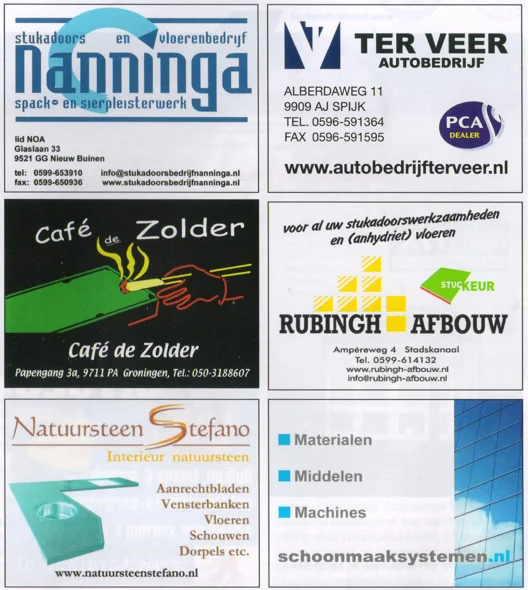
The sheer density of these advertisements reflects a robust regional housing market and a culture that deeply values home ownership and renovation. The club’s commercial department clearly knew their audience: practical, hands-on people who appreciate solid craftsmanship as much as a solid defensive line on the pitch.
A Look into the Future
Viewed from 2026, the heavy presence of plasterers and builders in these 2013 programmes feels incredibly prophetic. Just a few years later, the escalating seismic crisis caused by gas extraction turned the Groningen province into a literal construction zone. The government-mandated reinforcement operation (versterkingsoperatie) meant that skilled plasterers, bricklayers, and foundation experts became the most sought-after professionals in the country. Companies like those advertised here found themselves on the frontlines of repairing the cracked walls and shattered foundations of thousands of northern homes, proving that the businesses supporting the football club were also the ones physically holding the region together.