The absolute magic of the KNVB Beker (Dutch Cup) lies in the collision of different footballing universes. For a few nights every autumn, plumbers, teachers, and electricians get to step onto the pristine grass of Eredivisie stadiums to face full-time professionals. Page 2 of the October 30, 2013 matchday programme captures this romantic dynamic perfectly, offering a deeply respectful profile of the visiting amateur side, VV Capelle.
The “De Tegenstander” (The Opponent) section does not treat the visitors as a mere stepping stone. Instead, it provides a meticulous breakdown of the club from the Topklasse Zaterdag (the highest amateur tier at the time). The text notes that Capelle, managed by Theo de Boon, plays at Sportpark ‘t Slot, which holds 4,000 people—a stark contrast to the 22,000-seat Euroborg. But the programme also issues a clear warning to the home fans: these amateurs have teeth. The text highlights that Capelle reached this round by knocking out professional Jupiler League side Almere City FC in the previous round.
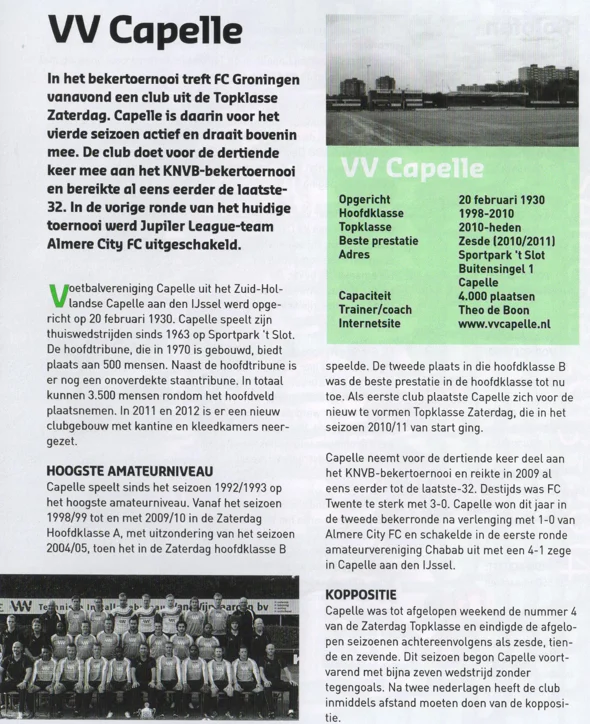
The article also delves into their cup history, noting their heroic run in 2009 when they reached the last 32 before finally falling 3-0 to FC Twente. For the players of VV Capelle, arriving in Groningen was the ultimate reward for their hard work in the amateur leagues. For the editors of the matchday programme, it was an exercise in professional respect, ensuring the fans knew exactly who was stepping onto their pitch.
A Look into the Future
The Topklasse mentioned in this article was eventually restructured by the KNVB into the Tweede Divisie and Derde Divisie, further bridging the gap between amateur and professional football in the Netherlands. VV Capelle fought bravely that evening but ultimately succumbed to a 2-0 defeat, ending their cup dream. However, the respect shown to them by FC Groningen is a testament to the egalitarian spirit of Dutch football. The professional focus required to dispatch these motivated amateur sides laid the psychological groundwork for Groningen’s ultimate triumph: winning the entire KNVB Cup just one season later.