
The transition into the European playoffs brings a sudden, massive shift in the disciplinary rules of the Eredivisie, and page 13 of the May 2014 matchday programme highlights exactly how this impacted FC Groningen. Under the header “KIEFTENBELD GESCHORST; SCHONE LEI” (Kieftenbeld suspended; Clean Slate), the club explains the new reality.
While midfield enforcer Maikel Kieftenbeld was suspended for this match due to a red card received in the regular season, the rest of the squad received a massive gift from the KNVB. “The rest of the selection starts the play-offs with a clean slate,” the text announces. All accumulated yellow cards from the 34-game season were wiped out. For a Groningen team that had famously maintained a 75-match streak of receiving cards and was statistically one of the most aggressive teams in the league, this “amnesty” was a monumental advantage. They could enter the physical battles of the playoffs without the fear of immediate suspension hanging over their key defenders.
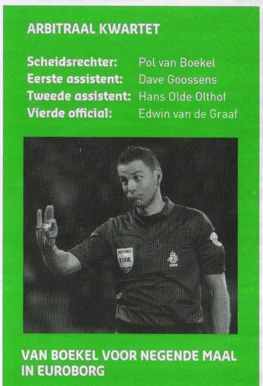
However, to ensure the “clean slate” wasn’t abused, the federation sent a strict enforcer to the Euroborg. The “Arbitraal Kwartet” on page 12 introduces referee Pol van Boekel, supported by assistants Dave Goossens and Hans Olde Olthof, with Edwin van de Graaf as the fourth official. The statistics printed below Van Boekel’s name were a clear warning: in 22 Eredivisie matches that season, he had handed out 85 yellow cards, one direct red, and 14 penalties. The slate may have been wiped clean, but Van Boekel was fully prepared to start writing in his notebook again.
A Look into the Future
The “clean slate” rule allowed manager Erwin van de Looi to deploy his aggressive, high-pressing tactical style without hesitation throughout the playoffs, ultimately overwhelming Vitesse and AZ Alkmaar to secure European qualification. Pol van Boekel managed the tension of this specific semi-final expertly and went on to have a long, distinguished career as a top Eredivisie referee and a prominent VAR official for UEFA. The disciplinary reset documented on this page proved to be the exact catalyst Groningen needed to unleash their full physical potential in the knockout stages.