
As spring finally arrived in the northern Netherlands, the FC Groningen Junior Club shifted its focus to the upcoming holidays. Page 30 of the March 22 matchday programme against Vitesse shows the club preparing to turn the stadium into a massive playground for Easter.
The page announces a “Paasactiviteit” (Easter activity) scheduled for mid-April. “All Easter bunnies are going to hide eggs again to surprise children,” the text reads, inviting kids up to 6 years old to search for eggs inside the Euroborg and earn a “Paashaasdiploma” (Easter Bunny diploma). It is another charming example of the club embedding itself into the family traditions of its supporters. But the most permanent memory provided by the club is printed right next to this announcement: the names of the children who participated in the matchday rituals.
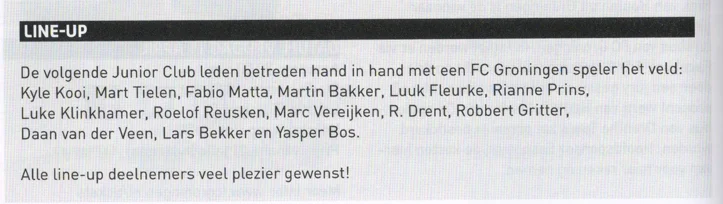
The 14 children who braved the tension of the Eredivisie clash to walk out with the players were: Kyle Kooi, Mart Tielen, Fabio Matta, Martin Bakker, Luuk Fleurke, Rianne Prins, Luke Klinkhamer, Roelof Reusken, Marc Vereijken, R. Drent, Robbert Gritter, Daan van der Veen, Lars Bekker, and Yasper Bos.
A Look into the Future
The club’s strategy of monopolizing the school holidays with engaging, family-centric activities is a masterclass in building generational loyalty. By 2026, the kids listed on this page are young adults. The memories of walking out onto the pitch, or searching for Easter eggs in the stands of the Euroborg, are the exact experiences that convert casual childhood interest into hardcore, lifelong season-ticket holding fandom. The club didn’t just entertain them for an afternoon; they secured their support for decades.