
There are moments in football marketing that transcend standard corporate sponsorship and become the stuff of legend. The back cover of this programme captures one of those moments perfectly. As the city fell into a state of absolute hysteria ahead of the KNVB Beker 2015 final, main sponsor Essent orchestrated an act of logistical brilliance: they funded a historic caravan of 250 green buses to transport the fans from the far North all the way to Rotterdam.
The image of an endless convoy of green buses snaking down the Dutch highways towards De Kuip is burned into the collective memory of the province. Essent brilliantly fused their corporate identity as a “green energy” provider with the club’s iconic green-and-white colors, completely underwriting the travel for the Green Army. It was a massive mobilization—thousands of fans leaving the city and the rural Ommeland to witness the squad managed by Erwin van de Looi fight for immortality.
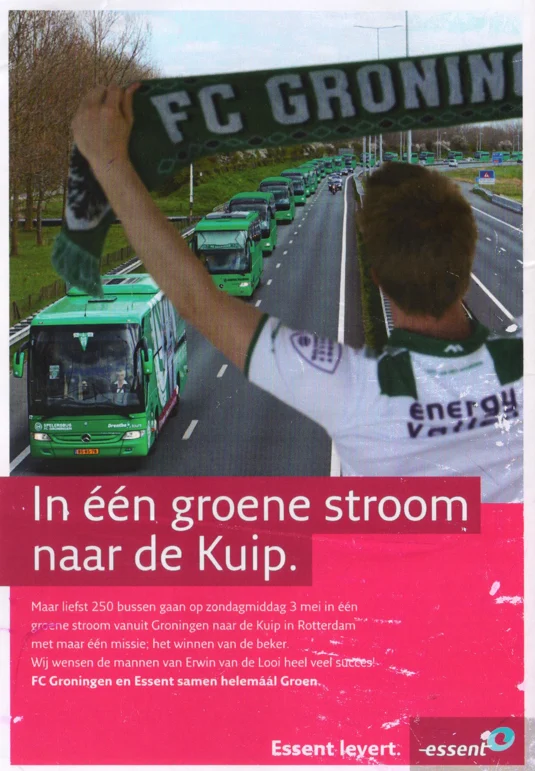
This was not just a football trip; it was a cultural exodus. The programme captures the sheer scale of the operation—18,000 tickets sold out in exactly 30 minutes. It perfectly illustrates how a corporate sponsor can move beyond putting a logo on a shirt and actually facilitate a once-in-a-lifetime cultural event, earning a permanent place in the hearts of the supporters.
A Look into the Future
In 2026, sports marketing is heavily dominated by digital crypto assets, global betting conglomerates, and AI-driven fan engagement platforms. Essent eventually stepped down as the main shirt sponsor as the European energy market underwent massive shifts. However, marketing students and football historians still study the “250 Green Buses” campaign. It remains the gold standard in the Netherlands for how a local sponsor can physically mobilize an entire province, proving that the most powerful marketing is the kind that literally drives the fans to victory.